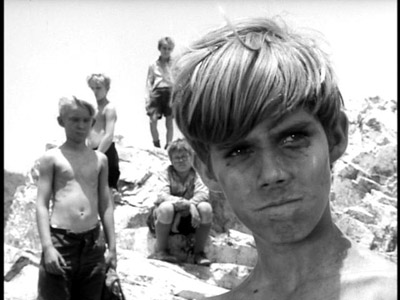
Päivän meemi:
Olet siis suvaitsevainen vasemmistolainen, mutta persut ovat mielestäsi halveksuttavia juntteja

Nuorena teininä ylpeästi rauhallisessa Kanadassa romanttisella 1960-luvulla uskoin vakaumuksellisesti Bakuninin anarkismiin. Nauroin vanhempieni väitteelle, että jos valtiovalta laskisi aseensa, helvetti pääsisi valloilleen.Kilpailevat ennusteemme testattiin klo 8:00 lokakuun 17. päivänä 1969, kun Montrealin poliisi meni lakkoon. Klo 11:20 ryöstettiin ensimmäinen pankki. Puolilta päivin useimmat keskustan kaupat oli jo suljettu ryöstelyn takia. Muutama tunti myöhemmin taksikuskit polttivat lentokenttäasiakkaista kilpailevan limusiinipalvelun autotallin, sala-ampuja surmasi katolta provinssipoliisin upseerin, mellakoijat tunkeutuivat useisiin hotelleihin ja ravintoloihin ja eräs lääkäri surmasi murtovarkaan lähiöasunnossaan.Päivän päättyessä oli ryöstetty kuusi pankkia ja sata kauppaa, sytytetty kaksikymmentäviisi tulipaloa, rikotttu neljäkymmentä autolastillista näyteikkunalasia ja aiheutettu kolmenmiljoonan dollarin vahingot kiinteistöille ennen kuin viranomaiset kutsuivat paikalle armeijan ja tietysti ratsupoliisin järjestyksen palauttamiseksi. Tämä ratkaiseva empiirinen koe murskasi vasemmistolaisen politiikkani.
Latvasta laho yhteiskunta
Ennen 1960-luvun vasemmistolaista opiskelijaradikalismia akateeminen sivistys tarkoitti sitä, että ihminen saavutti aseman, jossa hän saattoi rakentaa yhteiskuntaa tuoden jotain uutta kansansa sivistystasoon. Sivitys tarkoitti vastakohtaa barbarismille, joka pyrkii hajoittamaan rakennetun yhteiskunnan arvoja ja perusteita. Vaikka vuoden 1968 mielipuolisuus menikin lopulta ohitse, ovat tänä päivänä kuitenkin yhteiskunnassa vallassa juurikin tuon aikakauden nuorison edustajat ja vaikka heidän radikalisminsa onkin taantunut, ovat he edelleen lähtökohdiltaan päinvastaisella kannalla suhteessa niihin ihanteisiin ja arvoihin, joita klassinen sivistys edusti.
Esimerkkinä mainitakseni V. A. Koskenniemi edusti valtavirtana viimeisiä klassisen sivistyksen akateemikkoja, ennen kuin rajojen rikkomisesta tuli niin taiteessa kuin humanistisissa tieteissäkin arvo sinänsä. Vaikka Suomen tilanteella toisen maailmansodan jälkeisessä maailmassa on syynsä siihen, miten Koskenniemeen suhtauduttiin, kuvaa hänen henkilöhistoriansa laajempaa aikakautensa murrosta. Oulusta kotoisin ollut Koskenniemi valmistui maisteriksi Helsingin yliopistosta vuonna 1907 ja toimi tämän jälkeen kirjallisuuskriitikkona ja vapaana kirjoittajana. Hänellä oli professuuri Turun yliopistossa, jonka rehtorinä hän toimi vuosina 1924-1932. Hänet oli tunnettu isänmaallisuudestaan, mutta hän oli erittäin pessimistinen länsimaiden tulevaisuudesta. Hän uskoi, että länsimainen sivilisaatio on rappeutumassa menettäen arvokkuutensa ja elinvoimaisuutensa. Hän saattoi olla pelottavankin oikeassa. Toisen maailmansodan jälkeisenä aikana Koskenniemi menetti arvostuksen ja hänestä tuli "venäläisen kulttuurin vihollinen ja Neuvostoliiton vastaisen shovinismin edustaja", kuten sosialisti Raoul Palmgren hänestä kirjoitti. Tuo aika merkitsi alkua kansalliselle itsettömyydelle ja kansalliselle itseinholle, jonka hedelmät roikkuvat tänä päivänä kansakuntamme johtavilla kerroksilla.
Poliittinen eliittimme on sen aikakauden tuotosta, jolloin muotiin tuli kaikkien vanhojen arvojen murskaaminen - eräänlainen kulttuurivallankumous. Siksi he suhtautuvat ylimielisisti omaan kansakuntaansa, nöyristelevät muiden kulttuurien edessä silloin, kun heidän pitäisi seistä suorana oman kansakuntansa olemassaolon oikeuden ja arvojen takana. Sen sijaan he jatkuvasti nostavat suomalaisesta kulttuurista esiin negatiivisia puolia ja korostavat sitä, kuinka meillä olisi muilta kansoilta opittavaa.
Mikäli kaikki heidän pilkkansa olisi perusteltua, olisin suuresti hämmentynyt siitä, kuinka tällainen rupusakki on onnistunut luomaan vauraan ja menestyvän valtion maassa, joka on kylmä ja vailla merkittäviä luonnonrikkauksia.
Lopulta tässä pilkassa ei ole kyse mistään muusta kuin siitä, että kansallisella itseinholla pyritään noustamaan itsensä muita ihmisiä paremmaksi ja edistyksellisemmäksi henkilöksi. Opiskelijaradikaalit eivät olleet radikaaleja siksi, että he olisivat kuuluneet johonkin sorrettuun joukkoon. Päinvastoin, heistä lähes kaikki olivat keski- tai yläluokkaa edustavien vanhempien lapsia. Radikalismi oli heille kapinaa ja egotrippiä vanhempiaan vastaan. Voidaankin sanoa, että suomalaisella perheellä tuohon aikaan oli todellista elintasoa vasta sitten, kun Westendissä sijaitsevan omakotitalon seinällä oli Särestöniemeä ja vähintään yksi lapsista oli taistolainen kommunisti.
Yhä tänäänkin on helppoa saavuttaa hyvän ihmisen status ja mahdollisesti suojatyöpaikka valtiolla tai vaikkapa YLE:llä vastustamalla perinteisiä arvoja, asevelvollisuutta, ydinperherakennetta, kansallisvaltiota ja klassisia kauneusihanteita.
Samoin on helppoa saavuttaa pahan ihmisen status kannattamalla aseellista maanpuolustusta, ydinperhettä, kansallisvaltiota ja klassisia kauneusihanteita.
Minä kuitenkin pidän näitä asioita merkityksellisinä ja säilyttämisen arvoisina asioina ja näen niille rationaaliset perusteet. Siksi minä olen mieluummin paha ihminen kuin kollektiivisessa itseinhossa rypevä rappionrakastaja.
Se, kuinka näin pääsi käymään on liian suuri aihe perattavaksi minun perehtyneisyydelläni. Yksi asia kuitenkin on ilmeistä: Yhteiskuntamme on latvastaan laho. Siksi olisi lahonneet kasvustot karsittava, jotta yhteiskunta voisi olla jälleen menestyvä ja elinvoimainen. Muutoin kansakunta lakkaa olemasta, mikäli se ei edes halua olla olemassa.
Good many conservatives promote the idea of American Exceptionalism as a hallmark of what America is all about. Our nation is supposed to be a ‘City on a Hill’ and a beacon of freedom to all other peoples around the world. US is supposed to stand for progress and human rights, and so forth and so on. They mention the Founding Fathers and Ronald Reagan. Didn’t the Founders establish a new kind of country, one where all people were equal and free. Didn’t Reagan speak of the struggle between Freedom and the Evil of Communism?
As ideas go, American Exceptionalism isn’t necessarily bad, at least in its moderate form. Yes, America has much that is unique and worthy of respect and emulation. There has never been a nation quite like the United States. And, US had probably has done more good for the world as a whole than any other country as a model, defender of freedom–against Nazism and communism–, and even as an interventionist. But, all ideas turn nasty and harmful when it becomes either dogmatic/fundamentalist or radical. Neocons took American Exceptionalism to absurd heights, whereby America could invade and rebuild other nations. One could argue that neoconservative foreign policy was really Zionism-by-other-means than a true Wilsonian policy of spreading democracy around the world–after all, no neocon ever argued for invading Sudan or Nepal. However, there have been neocons–especially the non-Jewish ones–who sincerely believed in some Messianic role America must play in order to spread human rights and democracy. They often invoke the name of Reagan, but I’m not sure Reagan would have been flattered. Though Reagan took the Cold War very seriously, what he meant by the ‘city on a hill’ metaphor was that US should try to be the best it can be; let other nations look to America as a model if they wish, but do not force the American way or system on other peoples. So, Reagan pulled out of Lebanon when things got hairy. When Asian nations like South Korea, Taiwan, and Philippines were ripe for democracy, Reagan didn’t stand in their way. But, at no point did Reagan say US should actively intervene to promote democracy in those countries. His policy was keep them as close allies, and when the people over there demand freedom, let things work out according to the inner dynamic within those countries.
Many of today’s American conservatives promote a rather arrogant and contemptuous–triumphalist–kind of American Exceptionalism. They constantly point to how US won the Cold War as if that has somehow vindicated American superiority for all time. They rest on their laurels and take American greatness for granted. They are blind to the dangers of this kind of dogmatic American Exceptionalism.
For starters, more one brags about oneself, the more one opens oneself to scrutiny–moral, ethical, legal, economic, political, etc. What is the biggest danger in politics? Hypocrisy. With American Exceptionalism blaring from the loudspeakers, many conservatives have become drowned in their own excessive pride. So, Americans brag that only they truly understand freedom, liberty, human rights, progress, decency, rule of law, and etc. Somehow, we are better than other peoples and nations. Naturally, this kind of attitude fills non-Americans with resentment. They understandably want to scrutinize everything about America to see if indeed America is such a great utopia of freedom, liberty, human rights, and rule of law. Even if the evidence shows America to be better than most countries, the reality is bound to fall far short of what is trumpeted by American Exceptionalists. A person calling himself a saint is stained more by a simple infraction than someone who admits he’s not perfect and commits a more grievous wrong.
When George W. Bush and his neoconservative buddies went around telling the world how great and decent America is–enough to play God in whether to invade and rebuild other countries–, most of the world was intimidated and offended. When US bombed Iraq with ‘shock and awe’, it was as if Dubya was playing righteous and almighty Jehovah or Jehubya smiting Saddam and Gomorrah. Since Americans made such a big deal of how good and decent they were, scandals such as those at Abu Gharib were bound to send shockwaves all over the world. American treatment of Iraqi POWs may not have been much worse than how other countries treat prisoners, but abuses at Abu Gharid were committed by a nation that elevated itself as a shining CITY ON A HILL. We all love to prick the self-righteous balloon with needles to see how many of its contentions are true convictions or false concoctions. The more George W. Bush and his supporters insisted on their goodness and nobility of intentions, the more their enemies at home and abroad pointed to and exposed all the things that had gone wrong in Iraq and Guantanamo. Conservatives were saying, ‘we can do whatever we want because we are so good and special’, and the rest of the world held a mirror up to them and said, ‘if you’re so good, why do you do such nasty shit?’ Thus, American Exceptionalism invites Anti-Americanism.
This is why we need America to be NORMAL country. This isn’t to say US is just like any other nation nor that there aren’t things about the US which are indeed admirable and even exceptional. It is rather an admittance and realization that, all said and done, Americans are people too and, as such, often fallible, foolish, deluded, and limited in what they can do. Americans should see themselves and exert themselves around the world as normal people trying to be better than as an exceptional people who can arrogantly rest on their laurels.
Also, we must keep in mind that American Exceptionalism today isn’t what it was long ago. Long ago, AE was displayed and practiced from a position of power. When the white man said America was a damn great country, he sure meant it and damn well intended to make sure everyone else in America agreed, whether they belonged to a minority group or recently arrived as immigrants. Back then, AE was a judgment on non-whites and newcomers, not on whites themselves. It was as if Anglo- and Northern European whites had built a great nation and had every right to ask non-whites and newcomers, ‘are you good enough to enjoy the freedom, rights, and opportunity of this great exceptional country?’ So, blacks, Asians, and Hispanics all sought to prove themselves as worthy of being good Americans. So, newly arrived immigrants from Eastern and Southern Europe also sought to assimilate into the new nation by proving themselves worthy. As the traditional white elite and masses held most of the cards in the moral equation, American Exceptionalism was indeed a potent weapon for settled white Americans.
But, what has happened to America since the 60s? America went through a great crisis of identity, confidence, unity, and continuity. The Black Power Movement–aka Civil Rights Movement–, the hellishness of Vietnam War, the rise of youth rebellion and hedonistic nihilism, and myriad other social upheavals threw a monkey wrench–or several of them–into the fan of American Exceptionalism. AE no longer was an issue of “are non-whites and new arrivals good enough for America the Beautiful and Exceptional” but rather, “are whites good enough for the ideals they’ve been trumpeting since the founding of this country?” What had once been an offensive weapon for white America turned into a defensive shield, and the shield has been getting battered more and more every year.
Blacks began to aks, “if you honkeys be so good and noble, why you done use us as slaves, mothafucka?” Non-white immigrants began asking, “if America for no discrimination by race, creed, or color, why white people favor white immigrant over non-white immigrant?” Mexican-Americans began to ask, “hey gringo, if America no imperialismo, why you take Mexican land?” Much the same happened with Christianity. One time, it had served as the offensive weapon that justified Western domination of the world–to spread the word of God and Christian civilization. But, as time went by, the conquered peoples and liberal elements among the whites began to ask, “if Christianity is all about love and sharing, how come white Christians conquerored, raped, pillaged, murdered, and exploited so many people?” Thus, Christianity eventually became a moral liability for Western civilization.
The lesson to draw from this is moral HUBRIS is a bad bad thing. Eventually, it begins to undermine one’s own power by raising questions among the oppressed or less fortunate, among the conscientious of your own kind, and even among neutral observers. If you tell oppressed peoples that they are living in a wonderful and exceptional society where all are equal and free, they will one day ask, “if that’s so, how come we are not free as you are?” And, if you raise your own children with the idea that they are living in the most wonderful country in the world, there will come a day when the kids–if they are conscientious–will look around at all the bullshit, imperfections, and hypocrisies and ask, “if our country is SO GOOD, how come there’s so much that is BAD?”
Consider the issue of American slavery. All societies practiced slavery through the ages, and American form of slavery was actually milder and humane than most. But, why does American slavery get more negative attention than all the other kinds in Africa, Asia, Middle East, Latin America, etc. A major reason is because Americans have been telling the world that United States has always been an exceptionally free, equal, and progressive country. Now, it may well have been true that, relatively speaking, America had always been freer and more progressive than most nations–even during the time of American slavery, as rest of the world also practiced slavery, often far worse forms. But, when Americans deliriously brag about American history and society as if America had been 99% good and 1% bad, they invite the rest of the world and anti-American critics at home to dig up all the dirt about how America was no Promised Land.
Finally, can we really say United States today uniquely stands for human rights, freedom, and equality? There are other democracies in the world, and many happen to be more obsessed with human rights and do-goody-ism than America. Sweden and Norway, for instance, give far more in foreign aid in per capita terms than does the United States. European Human Rights commissions are busy 24/7 in trying to resolve problems around the world. European nations are more committed to the idea of egalitarianism than America is–though Americans can argue that America has always been for political and legal equality, not economic equality. (But, in a nation where lawyers who are bought and sold make the laws, can we really say everyone is equal under the law in America?)
On the subject of freedom–especially in speech and expression–, America is indeed the exception as even Western democracies like Canada and Europe now have extensive laws censoring what goes by ‘hate speech’. But, American freedom in this area is not respected around the world but increasingly regarded in the same manner as Death Penalty–as something excessive, barbaric, uncouth, and regressive. Modern concept of human rights has gone from freedom to correctness, and supposedly the most progressive countries in the world now restrict freedom of speech for the sake of human rights. Indeed, Canadians often say such nonsense as, ‘we respect freedom of speech, we don’t worship it.’ What they worship is political correctness, and much the same can be said of most of Europe.
Does this mean that EU is now being inflated with its own moral Hubris, what with all the human rights commissions, all the save-the-world mantras, and PC formulations for multiculturalism and ‘gay rights’? Perhaps, but EU can get away with this stuff more than Americans. Why? Because US is the premier military power in the world, thus seen as a not just a moral bully but a military bully. In the context of American world hegemony, many nations are likely to view European moral righteousness as a necessary–if sometimes unpleasant–counterbalance against American domination through business, pop culture, and the military.
Posted by Andrea Ostrov Letania
Vuoden 1968 ja koko 60-luvun (vasemmiston mielestä) kovanaamaiset tapahtumat asettuvat islamin maihinnousun myötä käsittääkseni oikeisiin mittasuhteisiinsa. Loppujen lopuksi , kun vanhoja radikaaleja kuunnellaan, kuulostaa siltä kuin kapinallinen nuoriso nousi barrikaadeille suurinpiirten kolmannen valtakunnan Tiger-panssareita vastaan - niin kovanaamaista tuo sukupolvi uskoo olleensa.
Mutta on vain koko ajan huomattava, että kaikki tapahtui aika turvallisesti länsimaisen oikeusvaltion sisällä. Vanha homekorvainen toisaalta kreikkalais-roomalainen ja toisaalta kristillinen länsimaa kohteli runtelijoitaan suorastaan leväperäisesti, sillä on turha väittää hullun 1968 olleen mikään verilöyly. Tämä asettaa jonkinlaista perspektiiviä noille tapahtumille, sillä vaikkapa Hannu Salama paskoisi pitkin reisiään Geert Wildersin asemassa.
Vanhat radikaalit eivät ymmärrä mitä pitäisi tehdä siinä tilanteessa jossa osa maahanmuuttajista on suoraan vihamielistä uutta kotimaataan kohtaan ja jossa tuo vuorenvarma oikeusvaltion platformi ei enää ole varma. On siis tänään helppo nähdä, että tuolloiset kulttuuriradikaalit eivät suinkaan ole mitään kovanaamoja, sillä nämä eivät voi käsittää kuinka esim Theo Van Goghin tapaus on mahdollinen. Tai käsittävät kyllä; aika moni on uskoakseni vihdoin tajunnut että islam todella on uusille kotimailleen vihamielinen. Mutta pyörittävät edelleen samaa kultturineutraalia levyä ja pseudo-antirasistista nauhaa sanavapauden sijasta kun eivät muuta uskalla.
Ja siinäpä nämä kovanaamat 1968 sitten seisovat ilman vaatteita - tässä nämä sankarit sitten ovat aivan oikean vihamielisen teokratian edessä. Toista oli 1968 kun kulttuuripolitiikassa vastassa oli joko kohtalaisen lauhkean tai kuitenkin hallittavissa luterilainen/ katolinen kirkko.
Agnostikkona en mitenkään ota kantaa sellaisenaan kristillisten katsomusten puolesta, enkä väitä etteikö yhteiskunnalla ollut puutteita ennen 1968 - en sano että kaikki olisi ollut huonoa ja että pitäisi täysin palata vuoden 1968 takaiseen tilanteeseen. Mutta mitä teokratioihin tulee, agnostikkona vain totean tilanteen : vuoden 1968 kristilliset teokratiat olivat kyllä Euroopassa täysin hallittavissa olevia toisin kuin islam vuonna 2009, ja vuoden 1968 sukupolvi saa kyllä devalvoida omaa kovanaamaisuuttaan olennaisessa määrin.